Introduction
Construction, mining, and infrastructure projects generate vibration and sound data continuously — around the clock, across every active shift. The problem? Without real-time visibility, threshold exceedances get discovered after the fact. By the time a team reviews downloaded instrument data, the compliance window has passed and the liability may already exist.
Consider the scale of this exposure: the New York State Comptroller reported 90,861 construction-related noise complaints filed through NYC 311 in just 30 months. That's not an anomaly — it's a preview of what projects face when monitoring is reactive instead of continuous.
Cloud-based remote monitoring systems address this directly. They connect field sensors to secure online platforms, giving project managers and engineers 24/7 access to live data, automated alerts, and documented records from any device or location.
If your project depends on staying ahead of compliance thresholds — not catching up to them — this guide is for you. It covers how these systems work, their key benefits, must-have features, industry applications, and how to choose between renting and buying.
Key Takeaways
- Cloud-based monitoring connects field seismographs to online platforms for continuous, 24/7 data access
- Automated threshold alerts enable proactive compliance management before violations occur
- Federal regulations (OSMRE) require blast records to be retained for at least 3 years — cloud storage simplifies this
- Rental works best for short-term or single-phase projects; ownership makes financial sense for organizations with ongoing monitoring volume
- Field-to-cloud packages that include automated alerts, customized reporting, and data hosting are available for both rent and purchase
What Is a Cloud-Based Remote Monitoring System?
A cloud-based remote monitoring system links field-deployed sensors — primarily seismographs measuring ground vibration (PPV) and air overpressure/sound levels (dB) — to cloud-hosted data platforms. Data is captured continuously and made accessible remotely without requiring anyone on-site to download, transfer, or review it manually.
How It Differs from Traditional Monitoring
Legacy approaches require technicians to physically retrieve data from instruments in the field. That creates a gap, sometimes days wide, between when an event occurs and when anyone reviews it. There's no proactive notification, no real-time response — just delayed awareness of problems that may have already triggered complaints or regulatory scrutiny.
Cloud-connected systems eliminate that gap. Data flows from the sensor to the cloud automatically, and threshold exceedances trigger immediate alerts.
The Two Parameters That Matter Most
In construction and industrial contexts, cloud monitoring systems primarily track:
- Peak Particle Velocity (PPV) — measures ground vibration in inches per second (in/s), the standard metric for assessing structural damage risk
- Decibel levels (dB) — captures air overpressure and sound, relevant for neighbor relations and airblast compliance
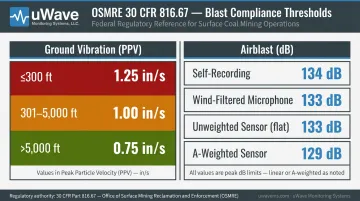
Both parameters carry regulatory weight. OSMRE's 30 CFR 816.67 sets federal blast vibration limits at 1.25 in/s within 300 feet of protected structures, stepping down to 0.75 in/s beyond 5,000 feet, with airblast limits ranging from 129 to 134 peak dB depending on the measurement system used.
State agencies, municipalities, and ISEE guidelines layer additional requirements on top of federal standards — and documented monitoring data is required to demonstrate compliance, not just good intention.
How Does a Cloud-Based Remote Monitoring System Work?
Sensor Deployment in the Field
Seismographs and environmental sensors are installed at or near the project perimeter — at structures, property lines, or sensitive receptor locations (homes, schools, or nearby occupied buildings). They run continuously during active construction, blasting, or heavy equipment operation.
The choice of instrument matters. For a standard pile driving job near a residential structure, a Micromate or Minimate Pro configured with a triaxial geophone and sound level microphone covers the key parameters. For blasting operations, a linear microphone for air overpressure monitoring gets added to the configuration.
Data Transmission to the Cloud
Field instruments transmit readings via cellular networks to cloud servers in near real-time. uWave Monitoring Systems uses Sierra Wireless 4G LTE gateways (RV50, RV50X, and RV55 models) on Verizon and Sprint networks, connected to Instantel seismographs via serial or Ethernet cables. An AutoCall Home feature pushes data to the cloud automatically after recorded events or on a scheduled basis. No manual retrieval required.
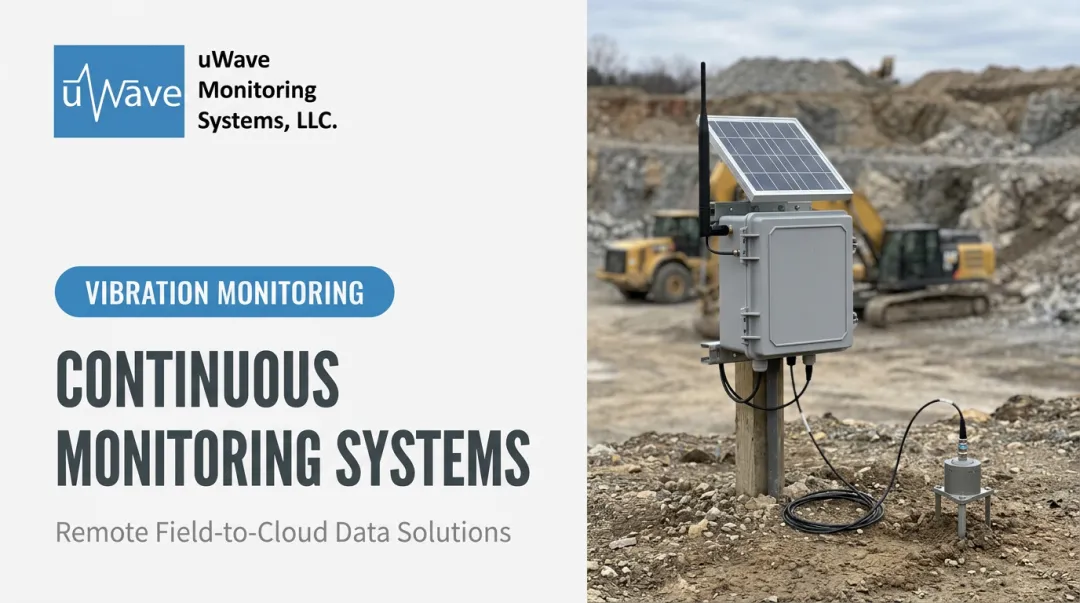
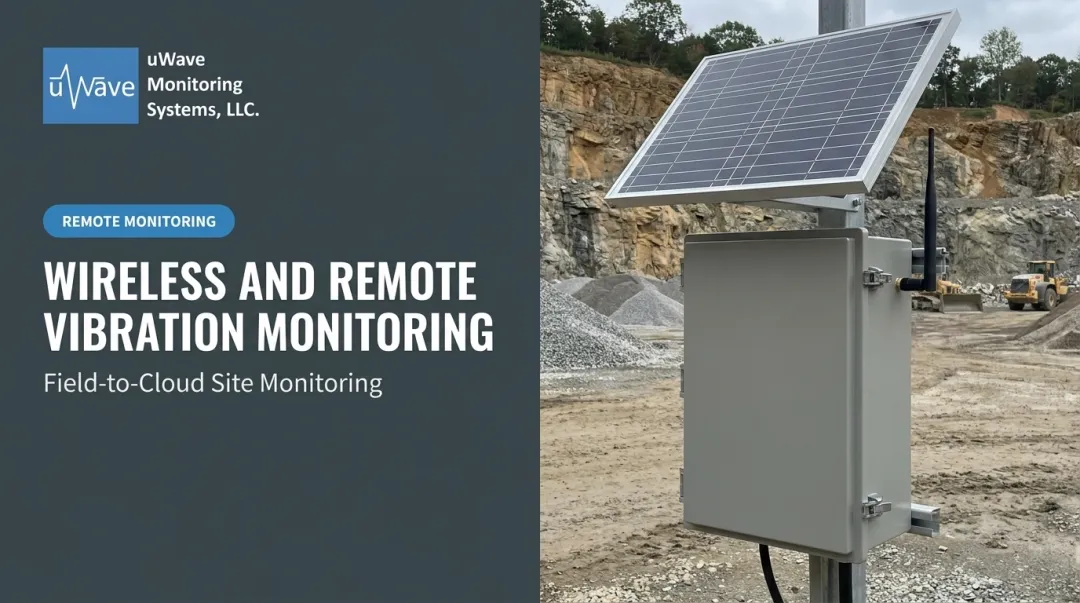
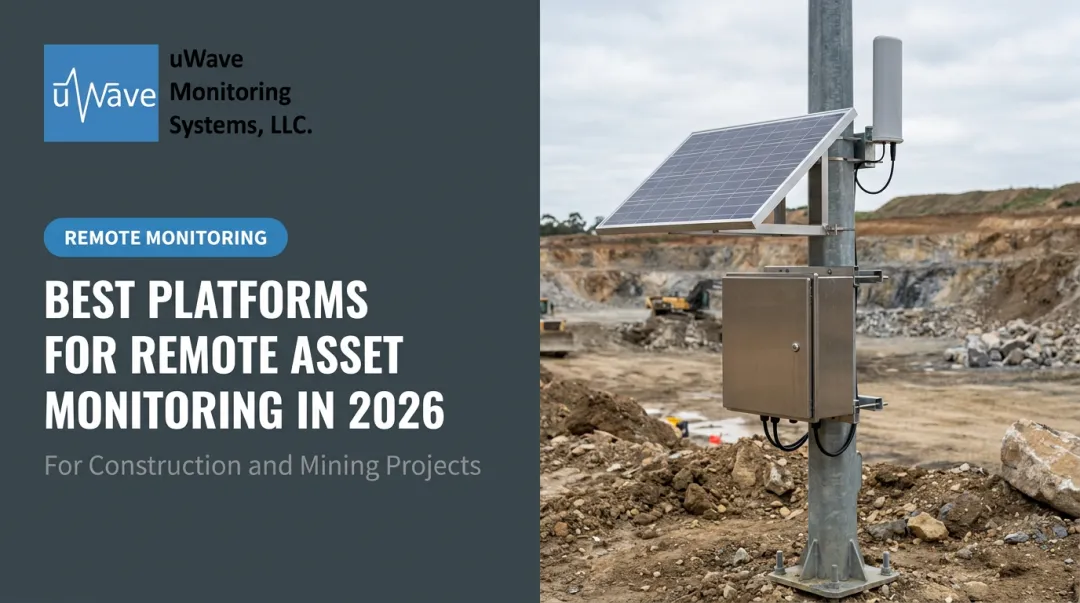
The V3 and V5 monitoring station enclosures house these components in a self-contained, solar-powered package built for active job sites where grid power is unavailable:
- 30-watt solar module and charge controller
- Cellular and GNSS antenna
- Programmable timer
- Lockable weatherproof housing
Cloud Hosting, Storage, and Access
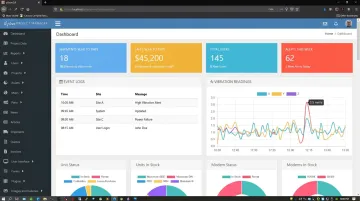
Data lands in a secure, redundant cloud platform and is time-stamped automatically. The uWave Project Manager is a fully browser-based portal — no proprietary software required — accessible 24/7 from any internet-connected device, including phones and tablets. Project engineers, safety officers, and compliance managers can pull up live readings or historical event data without setting foot on the job site.
Automated Alert Systems
When a sensor reading exceeds a pre-configured vibration or sound threshold, the system fires email and SMS notifications to designated contacts immediately. uWave's platform has handled 58 alerts in a single week across concurrent projects, reflecting the scale these systems are built to handle.
Maintenance alerts run in parallel, flagging equipment issues like battery status and sensor conditions so teams know the instrument is functioning correctly, not just that no threshold was triggered.
Reporting and Documentation
Cloud platforms generate customized reports directly from stored data. Through uWave's integration with THOR software, THOR generates event reports from uploaded monitoring data, and teams can export events to ASCII format for regulatory filings, compliance summaries, or dispute documentation. OSMRE requires blast records to be retained for at least 3 years, including seismographic and airblast data. Cloud storage turns that compliance obligation into an automated archive rather than a manual paperwork task.
Key Benefits for Construction and Infrastructure Projects
24/7 Remote Project Access
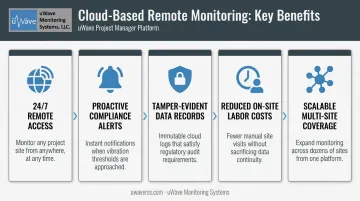
Project managers no longer need to be on-site to verify monitoring status. Web-based access allows real-time data review from any location — useful when managing multiple concurrent job sites, working with distributed teams, or responding to a contractor call at 11 PM about a blast event that just triggered.
Proactive Compliance Management
Automated threshold alerts shift teams from reactive to proactive. When a vibration or noise limit is approached, the right people are notified instantly. That creates a window to adjust blast designs, modify equipment operation, or pause work before a violation gets recorded or a complaint gets filed.
The SR520 Montlake Vibration Monitoring Plan built this workflow directly into its requirements: vibration data uploaded to a secure online database, with a defined process to identify the operations triggering threshold alerts and determine whether work could continue.
Secure, Tamper-Evident Data Records
That compliance documentation needs somewhere to live. Cloud-stored monitoring data provides a permanent, time-stamped record that can be produced in response to neighbor disputes, regulatory inquiries, or litigation. Secure backup also protects records from equipment damage or theft — a real risk on active construction sites where instruments are left unattended.
Reduced On-Site Labor Costs
Automated data collection eliminates the need for personnel to manually retrieve instrument data or conduct routine site checks. Teams can redirect that time toward higher-value work — particularly on long-duration projects where manual retrieval would otherwise consume significant field hours. Key labor reductions include:
- Eliminating scheduled site visits just to download data
- Replacing manual status checks with automated maintenance alerts
- Reducing response lag when threshold events occur overnight or on weekends
Scalable Coverage Across Multiple Sites
Cloud platforms aggregate data from a single sensor or a multi-instrument network spread across several project locations simultaneously. Ottawa's Combined Sewage Storage Tunnel project demonstrates this at scale: 90 Instantel monitoring units deployed across 6 km of downtown tunneling from 2016 to 2020, with more than 60 units reporting simultaneously during peak construction.
Essential Features to Look For
Alert and Notification Capabilities
The alert system is where cloud monitoring earns its value. Look for:
- Configurable thresholds for both PPV and dB — set below permit limits, not at them
- Dual-channel delivery via email and SMS to multiple designated contacts
- Maintenance alerts that flag equipment issues confirming the instrument is working, not simply reading no activity
- Immediate notification with no batch delay so alerts trigger at the event, not during a scheduled review cycle
Web-Based Data Portal and Reporting
A quality cloud portal should provide:
- 24/7 browser-based access with no proprietary software installation required
- On-demand reporting with customizable project report generation
- Secure data backup maintained throughout the project lifecycle
uWave's Project Manager platform covers all three. It's device-agnostic and fully browser-based, with automated vibration, sound, and maintenance alerts plus customized reporting built into their field-to-cloud packages.
Remote Communications Infrastructure
Cellular reliability varies significantly by site location. When evaluating a provider, check that they use industrial-grade modems suited for remote or access-restricted sites, confirm which carrier networks are supported, and ask whether remote communications consulting is available for challenging locations. uWave offers remote communications consulting as a standalone service — useful when standard cellular coverage isn't reliable enough for continuous data transmission.
Industry Applications: Who Uses Cloud-Based Remote Monitoring?
Heavy Construction and Demolition
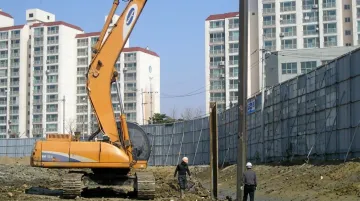
Pile driving, excavation, and demolition near occupied buildings generate the highest-risk vibration profiles. Caltrans data puts impact pile driver PPV at 0.65 in/s at 25 feet — well above damage thresholds for older or historic structures. Cloud-based monitoring gives contractors documented proof of compliance and a defensible record if a neighbor files a damage claim.
Common high-risk activities requiring continuous monitoring:
- Impact and vibratory pile driving
- Hoe ram and hydraulic breaker work
- Crack-and-seat operations (up to 2.4 in/s at 25 ft)
- Demolition near occupied structures or utilities
Mining, Quarrying, and Blasting Operations
Surface mining operations face layered federal requirements — PPV limits, airblast limits, and 3-year recordkeeping mandates — that make cloud-connected monitoring a practical compliance necessity. Key operational benefits include:
- Immediate post-blast data review without waiting for on-site retrieval
- Searchable compliance archives maintained automatically across the project lifecycle
- Simultaneous access for blast crews and environmental managers from any location
Water Infrastructure, Transit, and Urban Development
Unlike blasting operations where events are discrete, pipeline installation, tunneling, and transit construction require sustained monitoring across months or years. The Ottawa CSST project — 6 km of downtown tunneling, 90 monitoring units, 4 years of continuous data — illustrates what cloud-based oversight looks like at infrastructure scale. At that volume, the practical requirement is a system that runs autonomously, flags threshold events in real time, and produces audit-ready records without manual data pulls at every site.
Renting vs. Buying a Cloud-Based Remote Monitoring System
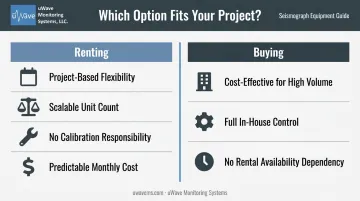
Neither option is universally better. The right choice depends on project duration, monitoring volume, and how much internal capacity a team has to manage equipment.
Renting: Best for Project-Based or Variable Demand
Rental is the practical default for most contractors:
- Return equipment at project end — no long-term commitment on single-phase or short-duration jobs
- Scale the number of units per project up or down as monitoring volume changes
- Offload calibration, configuration, and support to the rental provider when in-house expertise is limited
- Lock in predictable monthly costs with no capital outlay or maintenance liability
uWave's complete remote monitoring system rentals include:
- Instrument with standard sensors (triaxial geophone and/or microphone)
- Cables and lockable carrying case
- Cloud data hosting and email/text alerts
Enclosures, cellular modems, and additional accessories are available as add-on rental components.
Buying: Best for High-Volume, Ongoing Programs
Ownership becomes cost-effective for organizations running continuous or overlapping monitoring programs:
- Deploy across multiple long-term projects with recurring monitoring demand
- Manage calibration, data, and maintenance in-house without relying on a vendor
- Redeploy on your own schedule — no waiting on rental availability windows
There's no universal break-even threshold — get direct quotes from vendors to evaluate the cost case for your specific project volume.
uWave's Flexible Model
uWave Monitoring Systems offers both complete remote monitoring system rentals and equipment sales — including new Instantel instruments and factory-certified used units. Bulk monitoring package discounts apply to rentals and cloud services; extended discounts are available for multiple unit purchases on the sales side. Contact uWave directly for current pricing and package configurations.
Frequently Asked Questions
What is a cloud-based remote monitoring system?
A cloud-based remote monitoring system connects field sensors — such as seismographs measuring vibration and sound — to internet-hosted platforms that collect, store, and display data continuously. Project teams access live readings and receive automated alerts from any internet-connected device, without requiring on-site personnel.
What types of data can a cloud-based remote monitoring system track?
Most systems continuously track three categories of data:
- Ground vibration (peak particle velocity/PPV, measured in in/s)
- Air overpressure and sound levels (dB)
- Equipment status metrics such as battery condition and sensor health
All readings transmit to a cloud platform for real-time review.
How do automated alerts work in a cloud-based vibration monitoring system?
Users configure threshold levels for vibration and sound. When a sensor reading exceeds those limits, the system immediately sends email and SMS notifications to designated contacts, enabling fast response before a minor exceedance becomes a documented compliance incident.
Can cloud-based remote monitoring systems be rented instead of purchased?
Yes. Rental is common and practical for project-specific monitoring. uWave's rental packages include the instrument, sensors, cables, carrying case, cloud data service, and alerts as a bundled offering. Purchase makes more financial sense for organizations with continuous, high-volume monitoring requirements.
How secure is data stored in a cloud-based monitoring system?
Cloud monitoring platforms use secure, redundant data hosting that protects records from equipment damage, theft, or on-site incidents. Data is stored as a permanent, time-stamped archive — supporting regulatory compliance and providing defensible documentation if disputes arise.
What industries benefit most from cloud-based remote monitoring systems?
Any industry where vibration or noise must be continuously tracked benefits from cloud-based monitoring. The most common applications include heavy construction, mining and quarrying, water infrastructure, transit and tunneling, and urban development — particularly where regulatory limits, structural protection, or compliance documentation are required.