The gap between checks is where problems hide. A quarterly network audit misses the breach that happened in week six. A once-a-day seismograph reading misses the pile-driving spike that cracked a neighbor's foundation. Both scenarios end the same way: missed violations, unexpected fines, or a project shut down while everyone argues about what actually happened on-site.
This guide breaks down what continuous monitoring systems are, where they show up across industries, and how to choose one that fits your project, whether you're tracking network intrusions or ground vibration near a demolition site.
Key Takeaways
- Continuous monitoring closes detection gaps left by periodic, scheduled checks.
- Applications span cybersecurity, EPA emissions compliance, and construction vibration monitoring.
- Federal rule 30 CFR 816.67 sets blast vibration and airblast limits for compliance.
- Rental options cover short-term projects without buying equipment outright.
- The right partner provides cloud-hosted data and automated alerts with flexible terms.
What Is a Continuous Monitoring System?
A continuous monitoring system is a network of sensors, software, and automated processes that collects, analyzes, and reports data in real time, or close to it, rather than at scheduled intervals. Instead of a technician checking a gauge once a week, the system checks constantly and flags problems the moment they occur.
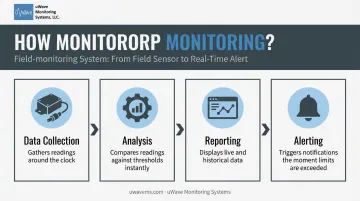
Nearly every continuous monitoring setup, regardless of industry, runs on four automated components:
- Data collection: sensors gather readings around the clock, not only during scheduled site visits
- Analysis: software compares readings against thresholds the instant they arrive
- Reporting: dashboards display current and historical data without manual compilation
- Alerting: notifications trigger the moment a limit is exceeded
The federal government formalized this idea for cybersecurity years ago. NIST defines Information Security Continuous Monitoring as "maintaining ongoing awareness of information security, vulnerabilities, and threats to support organizational risk management decisions." NIST frames this as a shift away from "complete security control assessments conducted at a distinct point in time."
That same logic doesn't stay locked inside IT departments. Swap "network vulnerabilities" for "ground vibration" or "air pollutant concentrations," and the sensor-to-cloud model works identically for physical and environmental monitoring.
Continuous Monitoring vs. Periodic Monitoring
Periodic monitoring checks conditions at set intervals: a weekly seismograph reading, a quarterly compliance audit, a monthly emissions test. Continuous monitoring analyzes data as it's collected.
The difference matters most in the gaps. A blast that exceeds a vibration limit at 2 p.m. on a Tuesday won't show up on a seismograph reading scheduled for Friday. By then, the damage claim is already filed, and there's no data to prove what actually happened.
Types & Real-World Examples of Continuous Monitoring Systems
Continuous monitoring covers a range of tools, each suited to what you're protecting.
IT and cybersecurity rely on three main tool types:
- SIEM platforms gather security data from across a network and present actionable information through a single interface
- Intrusion detection systems (IDS) monitor network and host activity for signs of possible incidents, covering network-based, wireless, and behavior-analysis variants
- Application performance monitoring (APM) tools continuously track response time, error rates, and resource utilization
Regulatory and environmental monitoring has its own established system: Continuous Emission Monitoring Systems (CEMS). The EPA requires CEMS under certain rules for continual compliance determinations or to identify when a facility exceeds an emissions standard. Under the Acid Rain Program, large fossil-fuel generating units must continuously monitor SO2 mass, CO2 mass, NOx rate, and heat input.
Construction and infrastructure vibration monitoring uses seismographs placed near blasting, pile driving, or demolition to continuously track ground vibration and airblast against ordinance limits. In many cases, these limits are legally binding, not simply recommended practice.
Federal surface-coal mining rules set specific thresholds:
- Peak particle velocity capped at 1.25 in/s within 300 feet of protected structures
- Limit drops to 0.75 in/s beyond 5,000 feet
- A seismographic record required for every blast under certain monitoring methods
Water infrastructure projects use similar logic. During trenchless pipe bursting near existing utilities, monitoring can track excessive vibration or displacement. Some water-main projects have gone further, installing permanent acoustic monitoring nodes on critical transmission mains during nearby pile driving to catch leaks before they become emergencies.
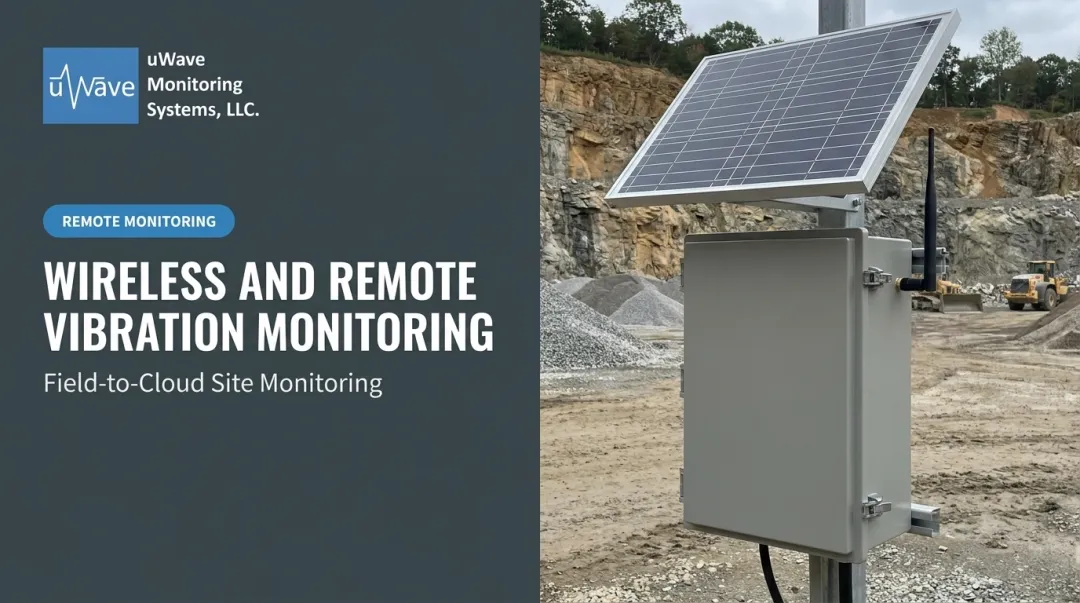
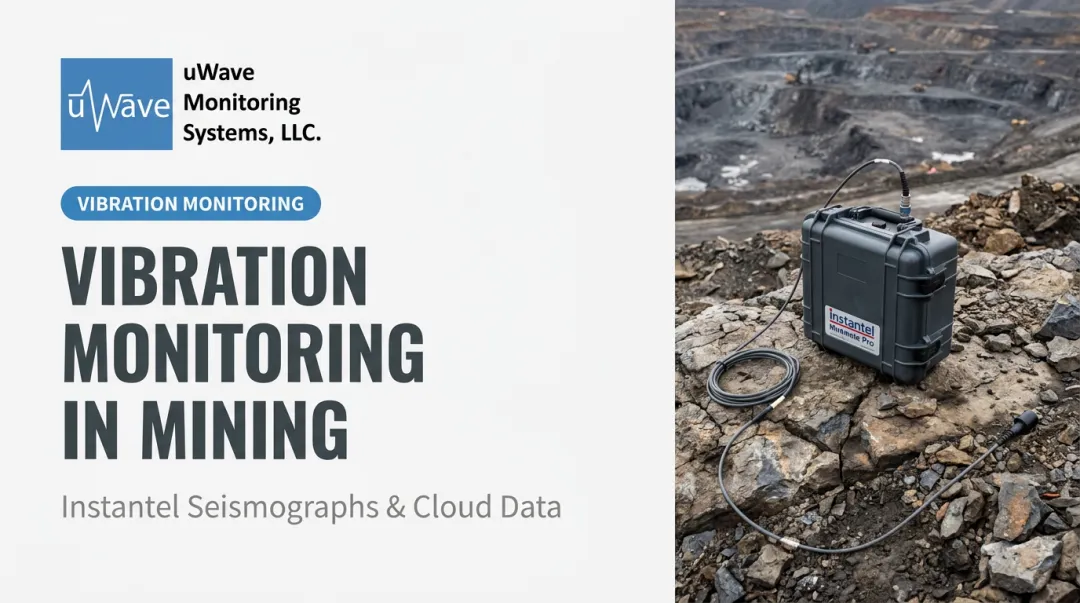
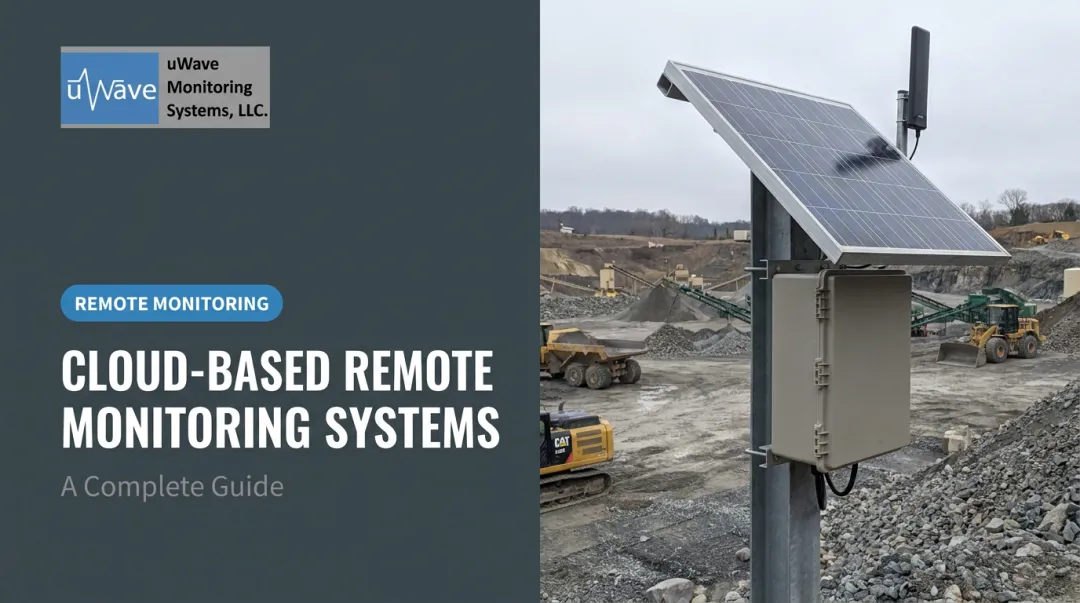
This is where uWave Monitoring Systems fits into the picture. Their Field-to-Cloud vibration and sound monitoring systems, built on Instantel seismographs like the Micromate and Blastmate III, pair triaxial geophones and air overpressure microphones with solar-powered field enclosures and cellular gateways.
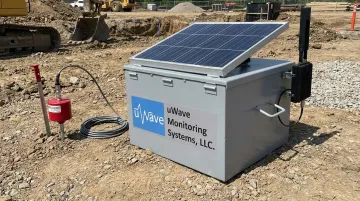
Data streams into the uWave Project Manager cloud platform, giving project teams continuous, real-time visibility instead of a stack of paper readings collected once a week.
Key Benefits of Continuous Monitoring Systems
The advantages of continuous monitoring go beyond convenience. They change how fast teams can respond and how well they're protected when something goes wrong.
Faster detection and response. NIST notes that continuous assessment turns a static, point-in-time process into a dynamic one that supports "timely risk response actions." Instead of discovering a threshold violation days later, teams see it as it happens.
Regulatory compliance support. Ongoing monitoring helps projects meet:
- Local vibration ordinances tied to blasting or pile driving
- EPA emission standards requiring continual compliance records
- Federal surface-coal blast limits under 30 CFR 816.67
Cost and resource efficiency. Automated monitoring cuts down on manual site visits and staff hours spent collecting readings by hand. uWave also offers discounts for bulk monitoring packages and extended discounts on multiple unit purchases, which lowers the total cost for larger or multi-site projects.
Stronger legal documentation. Customized, timestamped reports create a data trail. If a neighboring property owner claims blast damage, a continuous record proves the vibration levels stayed within permitted limits at the time of the incident. That's far more persuasive than a memory of "it seemed fine."
Remote, 24/7 visibility. Project managers can check multiple job sites from a laptop or phone instead of driving between them. Platforms like uWave's also send maintenance alerts, flagging equipment issues before they create a data gap that undermines the entire monitoring record.
How to Implement a Continuous Monitoring System
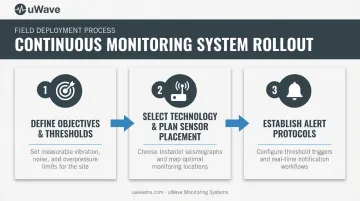
Rolling out continuous monitoring isn't complicated, but skipping steps causes problems later. Follow this sequence:
Define objectives and thresholds. Set measurable limits for vibration, noise, or structural movement based on project specs, local ordinances, and applicable federal or state rules, such as USBM RI 8507 blast limits. A limit that doesn't match your actual requirement is worse than none at all.
Select technology and plan sensor placement. Choose sensors and software based on site connectivity, power access, and proximity to sensitive structures. A remote quarry with no grid power calls for a solar-powered station with cellular backhaul; an urban site with strong coverage can run standard wired sensors.
Establish alert protocols. Specify exactly who gets notified (text, email, or dashboard alert) when a threshold is exceeded, what the escalation path looks like, and what remediation steps follow. An alert nobody acts on is just noise.
Common Challenges in Continuous Monitoring
Continuous monitoring solves real problems, but it introduces a few of its own if you're not prepared.
- Data overload and alert fatigue. IBM defines alert fatigue as exhaustion from excessive low-priority alerts, which delays response to the alerts that matter most.
- Remote site connectivity limitations. Many construction, mining, and quarry sites lack reliable network access, so field-to-cloud systems must be built for weak signal, not around it.
- Equipment reliability gaps. Sensors require regular calibration, and a missed maintenance cycle can create a coverage blind spot exactly when the data matters most.
Choosing the Right Continuous Monitoring Partner for Your Project
Not every project needs the same commitment level. A six-week demolition job has different needs than a multi-year transit build.
Match rental or purchase to project length. Renting makes sense for short-term work; buying pays off for companies running monitoring programs continuously across multiple sites. uWave offers both new equipment purchases and flexible rental terms, so you can align your approach with the length of the job.
Prioritize cloud-hosted, always-on access. Look for providers offering:
- Cloud-hosted data accessible from any location, 24/7
- Automated email and text alerts tied to specific thresholds
- Secure data backup so a single equipment failure doesn't erase your compliance record
Consider the full support package. uWave Monitoring Systems specializes in Instantel seismograph rental, sales, and service. The team also provides custom enclosure design and remote communications consulting for teams working construction, mining, water infrastructure, and transit projects. That combination matters when you're deploying equipment in places without reliable power or signal.
Frequently Asked Questions
What is a continuous monitoring system?
It's an automated system of sensors and software that continuously collects, analyzes, and reports data in real time, catching issues before they escalate rather than after the fact.
What is an example of a continuous monitor?
Examples include construction seismographs that track ground vibration and airblast near blasting or demolition sites, EPA-mandated emission monitors (CEMS), and SIEM cybersecurity platforms.
How is continuous monitoring different from periodic monitoring?
Periodic monitoring checks conditions at set intervals, like a weekly reading. Continuous monitoring analyzes data as it's collected, closing the detection gap between checks.
What industries require continuous vibration or sound monitoring?
Heavy construction, mining, quarrying, water infrastructure, and transit projects commonly need it, especially where blasting, pile driving, or demolition happens near existing structures.
Can continuous monitoring systems be rented for short-term projects?
Yes. Many providers, including uWave, offer rental options built around a project's actual timeline instead of forcing a full equipment purchase.
How do I know if my construction project needs continuous monitoring?
If your site is near sensitive structures, subject to a local vibration ordinance, or involves blasting or pile driving, continuous monitoring is typically required or strongly recommended.