Sound intensity is measured on a logarithmic scale, so a 10 dB increase represents ten times the sound intensity, even though it only sounds about twice as loud to the human ear. That gap between physical intensity and perceived loudness is exactly why guesswork gets people into trouble.
Accurately measuring noise, whether with a smartphone app, a handheld meter, or a continuous monitoring system, requires the right tool, proper technique, and a basic understanding of decibels. This guide walks through what you need, three methods ranging from casual to professional-grade, how to read your results, and the mistakes that quietly skew a reading.
Key Takeaways
- Decibels are logarithmic, so small dB jumps mean large increases in actual sound intensity.
- Smartphone apps work for quick checks; calibrated meters are needed for compliance decisions.
- Sound sustained above 85 dBA is the recognized threshold for hearing damage risk.
- Microphone placement and calibration determine whether a reading is trustworthy.
- Construction, mining, and infrastructure projects often need 24/7 monitoring, not one-off checks.
What You Need to Measure Noise Levels and Monitor Decibels
The right tool depends entirely on your goal. A quick field check needs something very different from a contractor documenting compliance with a city noise ordinance over an 18-month project.
Tools and Equipment Options
Depending on the level of accuracy required, your options include:
- Smartphone with a decibel meter app — free or low-cost, good for casual checks
- Handheld sound level meter (Class 1 or Class 2) — purpose-built, calibrated microphone
- Acoustic calibrator — verifies the meter's accuracy before and after use
- Windshield/windscreen — reduces wind noise for outdoor readings
- Remote, cloud-connected monitoring unit — logs decibel levels around the clock
For professional and long-term work, uWave Monitoring Systems supplies Instantel units that cover this range:
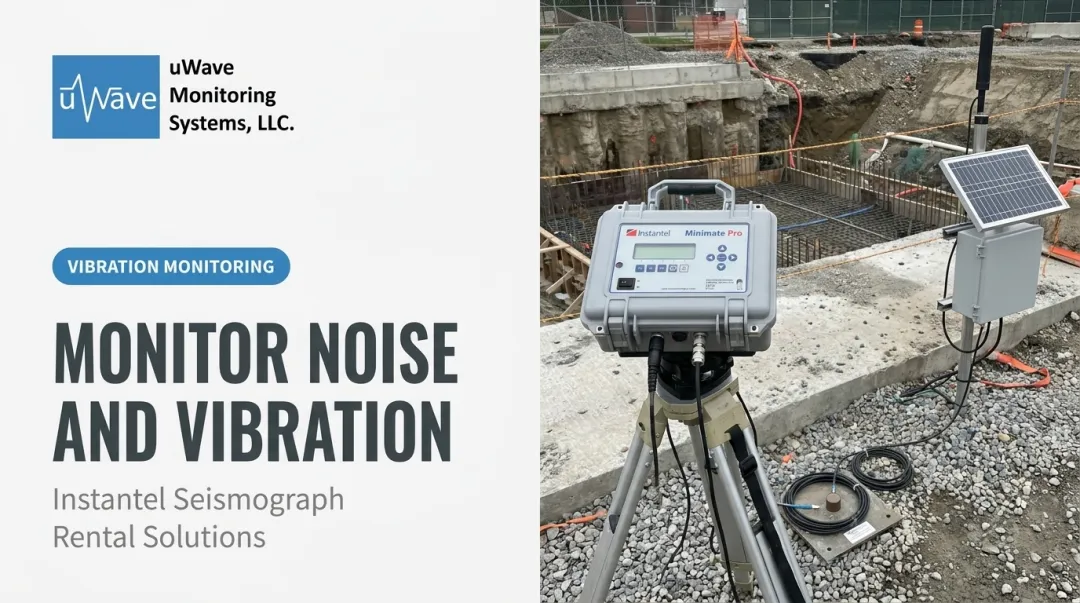
- Micromate / Micromate Plus — optional microphone channel for sound or air overpressure alongside vibration
- Minimate Pro4 — pairs with the Instantel Type 1 Sound Level Meter for simultaneous sound and vibration monitoring
- Blastmate III — peak-only sound monitoring from 50–110 dB(A), common on quarrying and blasting sites
Preconditions and Setup
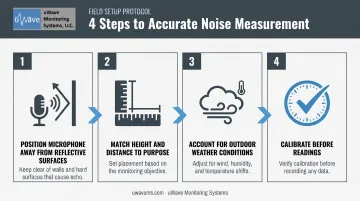
A reading is only as good as the setup behind it:
- Position the microphone away from reflective surfaces like walls or vehicles, which bounce sound back and inflate the reading.
- Match the height and distance to your purpose — worker hearing-zone measurements differ from property-line compliance measurements.
- Account for weather outdoors — wind, rain, and temperature swings all distort readings without proper shielding.
- Calibrate before professional readings, and recalibrate long-term monitoring equipment on a set schedule.
uWave recommends annual calibration for the seismographs and sound sensors in its remote monitoring systems so instruments stay within the manufacturer's specified accuracy for the life of a project.
Methods to Measure Noise Levels and Monitor Decibels
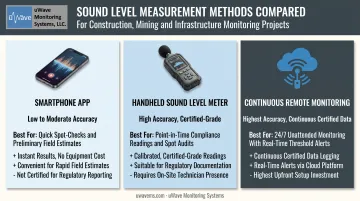
Three approaches cover most noise-measurement needs: smartphone checks, handheld meters, and continuous on-site monitoring. Choose based on the accuracy you need, how long you must collect data, and whether the reading is for a quick check or compliance documentation.
Method 1: Smartphone Decibel Meter Apps
A phone's built-in microphone can give a quick estimate of ambient sound. The NIOSH Sound Level Meter app is a strong free option on iOS and can reach roughly ±2 dBA when paired with a calibrated external microphone.
Steps:
- Download and open a reputable decibel meter app.
- Hold the phone away from pockets or bags, pointed toward the source.
- Read the real-time dB value and note peak versus average levels.
- Pros: Convenient, free, useful for quick spot checks
- Cons: Not compliance-grade; accuracy varies by phone model
Method 2: Dedicated Sound Level Meters
A purpose-built handheld meter with a calibrated microphone gives far more reliable single-point readings, and it is the standard tool for workplace safety and compliance checks. OSHA distinguishes between Type 1 meters (roughly ±1 dBA, used for precision work) and Type 2 meters (roughly ±2 dBA, sufficient for most workplace evaluations).
Steps:
- Calibrate the meter with a reference calibrator immediately before use.
- Position it at the required height and distance from the source or worker's ear.
- Hold steady and record the reading once it stabilizes, including min, max, and average.
- Pros: Accurate and often accepted for legal or safety documentation
- Cons: Purchase or rental cost; requires proper calibration
Method 3: Continuous Remote Noise Monitoring Systems
Automated, cloud-connected units left on-site log decibel levels around the clock. They are the practical choice for construction, mining, quarrying, and infrastructure projects that face strict noise ordinances and need defensible records over weeks or months.
uWave Monitoring Systems provides field-to-cloud sound monitoring in this category, including remote units with automated email and text alerts when a threshold is exceeded.
Steps:
- Install the monitoring unit at the location required by the source, project plan, or local ordinance.
- Configure alert thresholds and reporting schedules through the cloud dashboard.
- Review continuous data logs and automated reports throughout the project for compliance documentation.
- Pros: Built for long-duration compliance, defensible records, and instant threshold alerts
- Cons: Higher cost than a one-time reading; sized for project-scale monitoring, not occasional spot checks
How to Interpret Decibel Readings
Misreading a decibel level cuts both ways. Underestimate it, and you miss a real health or legal risk. Overreact to a harmless number, and you waste time chasing a non-issue. Context is what separates the two.
| Range | Examples | Action Needed |
|---|---|---|
| 30–50 dB (Quiet) | Quiet trailer, rural baseline, low ambient | None |
| 50–70 dB (Moderate) | On-site conversation, light traffic, staging area | Track if constant |
| 70–85 dB (Loud) | Generator, busy roadway, distant heavy equipment | Monitor exposure time |
| 85 dB+ (Hazardous) | Jackhammer, pile driving, rock drill, nearby equipment | Hearing protection required |
NIOSH's recommended exposure limit is 85 dBA averaged over an 8-hour workday. Under NIOSH's 3 dB exchange rate, safe exposure time cuts in half with every 3 dBA increase — 8 hours at 85 dBA, but just 2 hours at 91 dBA. A 6 dBA rise turns a full shift into a two-hour limit.
On a regulated project site, a single reading above the local noise ordinance limit should trigger corrective action, not just a note in a logbook. A continuous system logs that exceedance automatically in the alert history, giving you a timestamped record instead of a memory of "it seemed loud around noon."
Common Mistakes and Safety Best Practices
Bad readings and unsafe exposure both trace back to the same handful of avoidable habits.
Common errors:
- Using an uncalibrated device for a compliance decision
- Holding the microphone too close to, or shielded from, the source
- Relying on one snapshot reading instead of monitoring over time
- Ignoring wind or background interference outdoors
Best practices:
- Calibrate meters immediately before each use
- Position devices consistently at the same height and distance every time
- Use windshields for any outdoor measurement
- Choose continuous monitoring over isolated readings when hearing safety or compliance is on the line
The last point matters most on active project sites. A quick handheld reading tells you what's happening right now.
It says nothing about the 2 a.m. concrete pour or the equipment startup that happened while nobody had a meter in hand. Continuous, cloud-connected monitoring closes that gap.
Conclusion
Accurate noise measurement protects hearing health and helps you avoid noise complaints. Match the method to your purpose: a quick phone check for personal curiosity, a calibrated meter for a documented workplace reading, or continuous monitoring for a regulated project.
Reliable results depend on proper calibration, consistent placement, and tracking over time—not a single snapshot. For ongoing project-based sound monitoring, a managed remote system like those from uWave Monitoring Systems delivers continuous, defensible data with automated alerts the moment a threshold is crossed.
Frequently Asked Questions
How can you measure noise levels?
Three common options:
- Smartphone app for a quick, casual check
- Calibrated sound level meter for accurate single-point readings
- Continuous remote monitoring for ongoing compliance documentation
How many dB is a normal room?
A quiet room typically measures around 30–40 dB, while normal conversation or a lived-in room with background activity reaches closer to 50–60 dB.
What's the difference between dB and dBA?
dB is the general decibel scale, while dBA is A-weighted to reflect how the human ear actually perceives sound. That's why most consumer and workplace meters report readings in dBA.
What is considered a safe decibel level for daily exposure?
OSHA’s common threshold is 85 dBA averaged over an 8-hour day. Levels below that are generally safe for extended periods; above it, exposure time needs to shrink as the dBA rises.
What's the difference between Class 1 and Class 2 sound level meters?
Class 1 meters offer laboratory-grade accuracy, typically around ±1 dBA. Class 2 meters, accurate to roughly ±2 dBA, are suitable for general commercial, industrial, and residential assessments.
How long should noise be monitored on a construction site to meet compliance requirements?
Requirements vary by local ordinance, but continuous 24/7 monitoring throughout the project's duration is often required to produce a defensible compliance record rather than isolated spot checks.